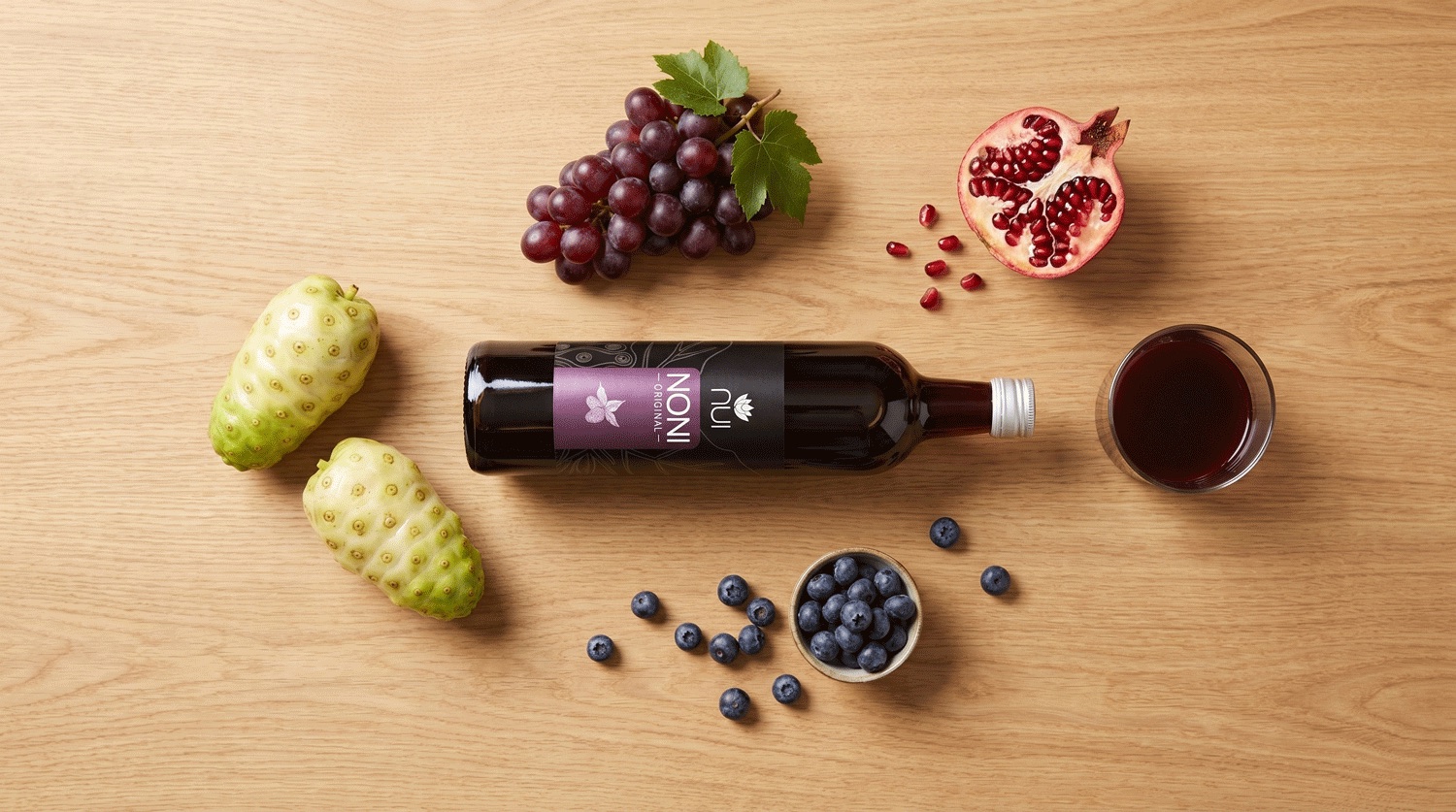
Morinda citrifolia grows where most of us only get to on holiday: in French Polynesia, on volcanic soils, in a climate that lets the fruit ripen all year round. The people there have used the noni fruit for centuries – long before anyone had the idea of bringing it to Europe.
Where the journey begins
Harvesting happens when the fruit is ripe – not when the container schedule demands it. The ripe noni has a pale, almost translucent skin and a smell that no one forgets once they’ve caught it. This very fruit is the starting point for everything that later ends up in the bottle.
Fermentation: time instead of additives
After the harvest, the fruit is processed into purée and fermented – a traditional method used in Polynesia for generations. Fermentation needs above all one thing: time. No accelerators, no shortcuts. The fermented purée is the base of NUI NONI Original and the reason for its characteristic taste.
Arrival in Vorarlberg
Testing, bottling and shipping happen in Vorarlberg. Here the purée gets its companions: organic direct juices of red grape, pomegranate and blueberry that give the intense noni note a frame. Here every batch is lab-tested, here it is bottled, and from here every bottle sets off on the last part of its journey – to you.
What “staying itself” means
It would be easy to hide the fruit’s character behind sweetness. We do the opposite: the noni note stays recognisable, the ingredient list stays short, and the label states exactly what’s in it. Noni juice is authorised as a food in the EU and our origin is certified – organic under AT-BIO-301, from import to bottling.
Aus diesem Artikel
Transparency note
This article describes origin and production – deliberately without health-related claims. What vitamin C from the juice can contribute you can read on the product page – there exclusively with authorised EU claims.